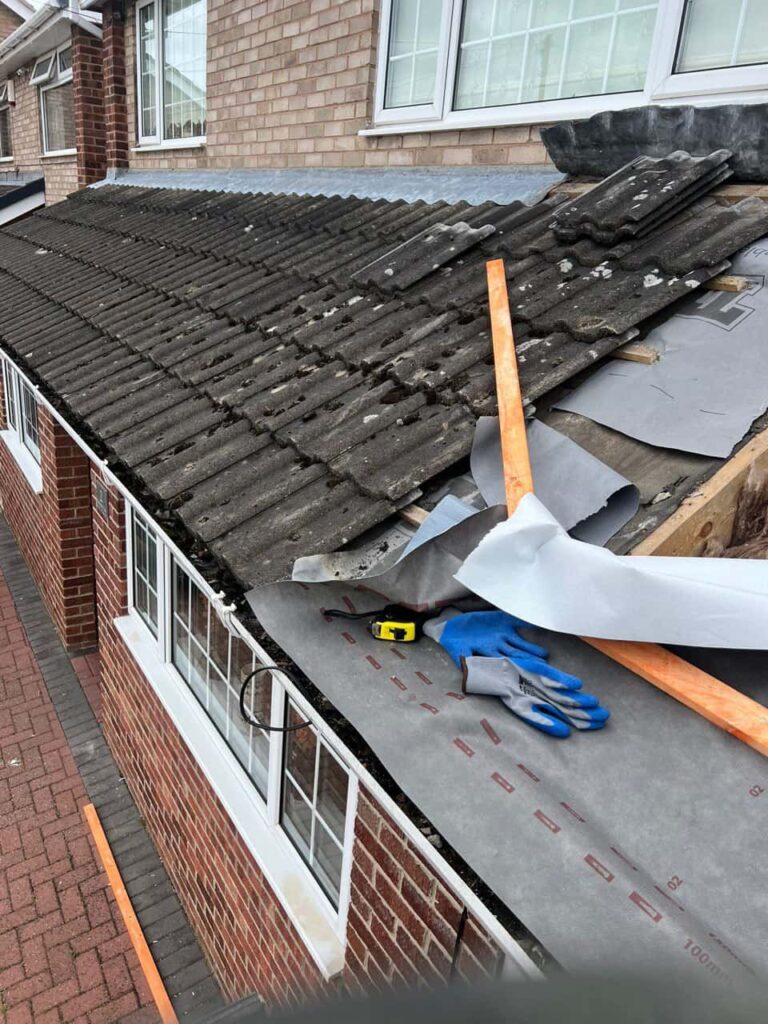
When contacting a roofer about a leak, a clear description of what you have observed can make the initial investigation more focused. The visible damp patch is not always directly beneath the roofing defect, as water can travel along underlay, timbers and other surfaces before entering the room below.
You do not need to diagnose the fault yourself. Instead, provide factual details about when the leak occurs, where the moisture appears and how the problem has changed. A roofer can then compare this information with the roof’s construction and condition.
Useful Details to Share When Reporting a Roof Leak
Even a short record of the leak can reveal patterns that are difficult to identify during dry weather. The following information will help the roofer understand the problem before carrying out a full inspection.
When Did You First Notice the Leak?
Explain when the leak or damp patch first appeared and whether it developed suddenly or gradually. A problem that started during one period of severe weather may have a different cause from staining that has slowly become more noticeable.
Tell the roofer whether the leak has happened once or returned several times. Recurring moisture can indicate an unresolved defect, deterioration around an earlier repair or water entering under particular conditions.
What Was the Weather Like?
The type of rainfall associated with the leak can provide valuable clues. Note whether the problem occurs during:
- Light but continuous rain
- Short periods of heavy rainfall
- Wind-driven rain
- Rain arriving from a particular direction
- Several consecutive wet days
- The hours after the rain has stopped
For example, a leak that only appears during windy conditions may involve a different weakness from one that develops after prolonged saturation.
Where Does the Water Appear?
Describe the affected room and the precise position of the moisture. Explain whether it is visible in the centre of the ceiling, near an external wall, around a chimney breast or beside a roof window.
If there is more than one damp patch, report every location. Separate marks may be connected by water travelling through the roof structure, or they may indicate more than one defect.
What Does the Leak Look Like?
The way moisture presents itself can help establish how water is moving through the property. Tell the roofer whether you have noticed:
- Occasional dripping
- A growing ceiling stain
- Water running down a wall
- Bubbling paint or peeling decoration
- Dampness without an active drip
- Moisture appearing around a light fitting
- A patch that remains damp between periods of rain
If water is close to electrical fittings, avoid touching the affected area and keep people away from it.
How Quickly Does the Moisture Appear?
Timing can be particularly helpful. Some leaks become visible as soon as rain begins, while others take several hours to emerge.
A delayed leak can suggest that water is collecting or travelling before reaching the interior. Tell the roofer approximately how long it takes for the first signs to appear and whether dripping continues after the weather improves.
Has the Problem Changed?
Explain whether the damp patch has grown, moved or become more frequent. A leak that once appeared only during severe weather but now develops during ordinary rainfall may indicate that the defect is worsening.
It is also helpful to mention changes in the volume of water, new staining nearby or a musty smell within the affected room or loft.
Are There Any Visible External Signs?
You can report anything visible from ground level or a safe window, but do not climb onto the roof. Useful observations may include:
- A slipped, cracked or missing tile
- Debris that has fallen into the garden
- Loose-looking flashing
- Damaged mortar around ridges or a chimney
- Overflowing guttering
- An uneven section of the roof covering
A roof can still leak when no damage is visible from the ground, so the absence of an obvious defect should not delay an inspection.
Is There Anything Visible in the Loft?
If the loft can be entered safely using suitable boarding, note any dark marks, damp insulation, wet underlay or staining on the timbers. Do not touch electrical components or step between joists.
Remember that the wettest area may not be the entry point. Water can run along rafters or collect on the underlay before dripping elsewhere.
Has the Area Been Repaired Before?
Provide details of any previous work near the affected section. Explain what was repaired, when the work took place and whether it stopped the leak for a period.
This history can help the roofer decide whether the current problem relates to the earlier defect, an adjoining weak point or a separate area of deterioration.
Photographs Can Provide a Useful Record
Take photographs of the internal damage when it appears, provided this can be done safely. Images taken at different stages can show how quickly the patch spreads and whether its position changes.
Safe ground-level photographs of the roof may also offer useful context. However, photographs should support a physical inspection rather than replace one.
Avoid Attempting to Identify the Cause Yourself
The position of the internal stain can be misleading, and applying sealant to the most obvious external feature may not stop the leak. An unsuitable temporary repair can also redirect water or conceal the original defect.
The most useful approach is to report what you have observed and allow the roofer to trace the route of the moisture systematically.
Conclusion
When reporting a roof leak, explain when it started, what weather triggers it, where the moisture appears and how it behaves. Details about previous repairs, visible changes and safe loft observations can also help the roofer investigate more efficiently.
LJ Roofing Melksham provides professional roof leak inspections and repairs in Melksham, Wiltshire. If you have noticed dripping, staining or unexplained dampness, contact us to arrange an assessment and identify the source before the problem spreads.
Call us on: 01225 434 494
Click here to find out more about LJ Roofing Melksham
Click here to complete our contact form and see how we can help with your roofing needs.