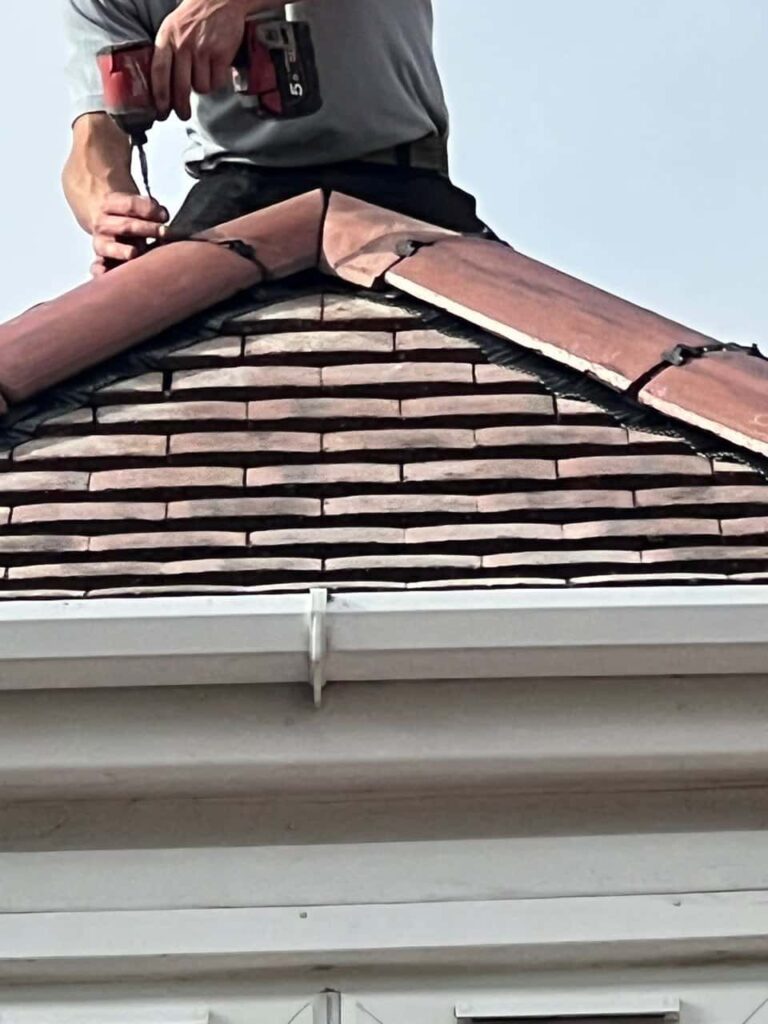
Understanding How Water Enters and Travels Through a Roof
A damp patch on a ceiling may appear to identify the position of a roof leak, but the true entry point can be some distance away. Once rain passes beneath the external covering, it may travel along underlay, rafters, battens or other surfaces before becoming visible inside the property.
This makes accurate roof leak detection essential. Repairing the area directly above an internal stain may not solve the problem if water is entering elsewhere. For property owners in Melksham, Wiltshire, a systematic roof inspection is the most reliable way to locate the defect and determine what needs attention.
Why the Visible Damp Patch Can Be Misleading
Water rarely follows a perfectly vertical route through a roofing system. It can run down the underside of tiles, follow a timber, collect on the underlay or move towards the lowest available point. Only then may it drip onto insulation or the ceiling below.
The position of the visible damage is therefore a clue rather than conclusive evidence. The source may be higher up the roof slope or beside a chimney, valley, vent or wall junction.
Tracing a leak requires the route of the water to be considered alongside the roof’s construction and recent weather conditions.
Common Sources of Roof Leaks
Roof leaks can develop where materials are damaged, displaced or no longer form an effective weatherproof junction. Common causes include:
- Cracked, broken or missing tiles
- Slates that have slipped out of position
- Loose or deteriorated lead flashing
- Defects around chimneys and roof penetrations
- Damaged ridge or hip components
- Blocked or deteriorating valleys
- Split, lifting or blistered flat roof coverings
- Failed seals around roof windows or vents
- Blocked gutters causing water to overflow
- Worn underlay exposed by movement in the covering
More than one defect may be present, particularly on an ageing roof. A complete assessment can establish whether the leak is isolated or part of wider deterioration.
Could a Slightly Displaced Tile Cause a Leak?
A tile does not need to be missing completely to allow rain beneath the roof covering. Even a slight movement can interrupt the intended overlap between neighbouring tiles. Wind-driven rain may then reach the underlay or the space beneath.
A displaced tile may also move further during subsequent periods of strong wind. Its fixings, supporting batten and adjacent tiles should be checked rather than simply pushing it back into place without investigating why it moved.
If the same area repeatedly requires attention, the problem may involve weakened fixings, damaged battens or movement elsewhere in the roof covering.
How Lead Flashing and Chimney Junctions Fail
Lead flashing seals vulnerable junctions where the roof meets a chimney, wall or other structure. If it lifts, cracks or pulls away from the adjoining surface, water can enter through the resulting gap.
Chimneys contain several potential entry points, including:
- Flashing around the chimney base
- Mortar joints between bricks
- The chimney crown or flaunching
- Junctions where different roof slopes meet
- Nearby tiles disturbed by movement
Water entering around a chimney can travel before appearing indoors, so staining beside a chimney breast does not always identify the precise defect. The surrounding roof area should be inspected as one connected system.
Why Valleys Are Vulnerable
Roof valleys carry water from two adjoining slopes and can receive a considerable volume of rainfall. Debris, damaged materials or poor alignment can restrict this flow, allowing water to back up beneath the surrounding tiles.
Because valleys connect several parts of the roof, leaks originating there can be difficult to trace from inside the property. Inspection should cover the valley lining, adjacent tiles, bedding and drainage route.
Clearing visible debris may help water move freely, but it will not correct cracks, deterioration or defects beneath the surface.
Can Gutters Cause Internal Damp?
Guttering does not form part of the main roof covering, but a blockage or failed section can contribute to water ingress. If rainwater cannot drain effectively, it may overflow against fascias, soffits or external walls. In some situations, water can find a route into the roof edge.
Signs of a possible guttering or drainage problem include:
- Overflow during rainfall
- Staining beneath gutter joints
- Sagging or misaligned sections
- Persistent damp near the eaves
- Vegetation growing from the gutter
- Water collecting behind or beneath the guttering
The roof edge and drainage system should be assessed together because problems in one can affect the other.
Why Roof Leaks May Only Appear in Certain Weather
Some leaks become visible only during prolonged rainfall, whereas others appear when rain is driven from a particular direction. This can help indicate how water is entering.
A small opening may resist light rain but allow water through once the materials become saturated. Wind may also push rain beneath displaced tiles or lifted flashing. Leaks that occur after rainfall has stopped can result from water collecting within the roof structure before eventually reaching the ceiling.
Recording when the leak appears can provide useful information during an inspection.
What You Can Check Safely
Without climbing onto the roof, property owners can look for signs that may help a roofing contractor trace the problem. Useful observations include:
- The location and size of internal staining
- Whether the damp appears during or after rainfall
- Signs of moisture within the loft
- Daylight visible through the roof covering
- Damp insulation or timbers
- Missing or visibly displaced materials seen from ground level
- Overflowing gutters
Electrical fittings near water should not be touched. Roof access should also be left to trained professionals with suitable equipment.
The Value of Professional Roof Leak Detection
A professional inspection does more than locate an obvious opening. It considers the roof covering, flashing, valleys, penetrations, drainage and internal signs together. This helps distinguish the original entry point from the route water has followed.
Accurate diagnosis allows the repair to address the underlying cause rather than only treating the visible symptom. It can also identify nearby weaknesses that may otherwise lead to recurring leaks.
Conclusion
The source of a roof leak is not always directly above the damp patch inside your property. Water can enter through displaced tiles, defective flashing, damaged valleys, flat roof coverings or drainage faults before travelling through the roof structure.
A careful inspection is the best way to establish where the water is entering and what repair is required. If you have discovered a roof leak in Melksham, Wiltshire, LJ Roofing Melksham can assess the affected area, trace the likely source and recommend an appropriate solution. Contact the team to arrange a professional roof inspection.
Call us on: 01225 434 494
Click here to find out more about LJ Roofing Melksham
Click here to complete our contact form and see how we can help with your roofing needs.